
STRATEGY FOR THE DUNGHILL
Using the strategy below, you will already be well on your way to reducing the number of flies in your stable.
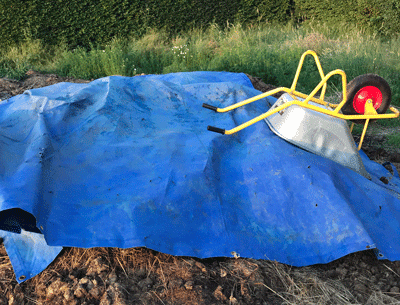
Cover the dunghill with a tarp so that the flies are not able to land on it and lay eggs. The tarp should ideally be black, which absorbs heat and makes the dunghill reach the optimum temperature from the heat of the sun. This will promote composting and heat generation. The heat also means that fly eggs and larvae will die.
Remember - in 10 days, one fly can hatch 500 new ones. Therefore it is very important that you do not let the eggs hatch on the dunghill.
There will always be flies around the dunghill, however, no matter how good a job you do in covering it up. To catch flies by the dunghill, you can use FlyCatch which can be placed in a strategic position in relation to where the flies swarm. FlyCatch can withstand quite a bit of rough weather and moisture, but it cannot withstand a real downpour.

Buy a FlyCatch package with five foldable units with adhesive on two sides.
- Use FlyCatch to capture flies in stables and elsewhere. For example, on the terrace, where flies can be a nuisance.
- Place FlyCatch where you can see the flies are active, and they will also be swarming by the dunghill
- Do not place FlyCatch where the horses can reach it, as they will probably knock it over in no time.
- Repeat the process on a regular basis when the flies become too much of a nuisance.
- Involve other horse owners in the fight against flies.
- Perhaps you can buy the products as a group and save 15% or 30% on bulk purchases.


